
Fear of Sugar: Why Restriction Makes Sweets Hard to Resist
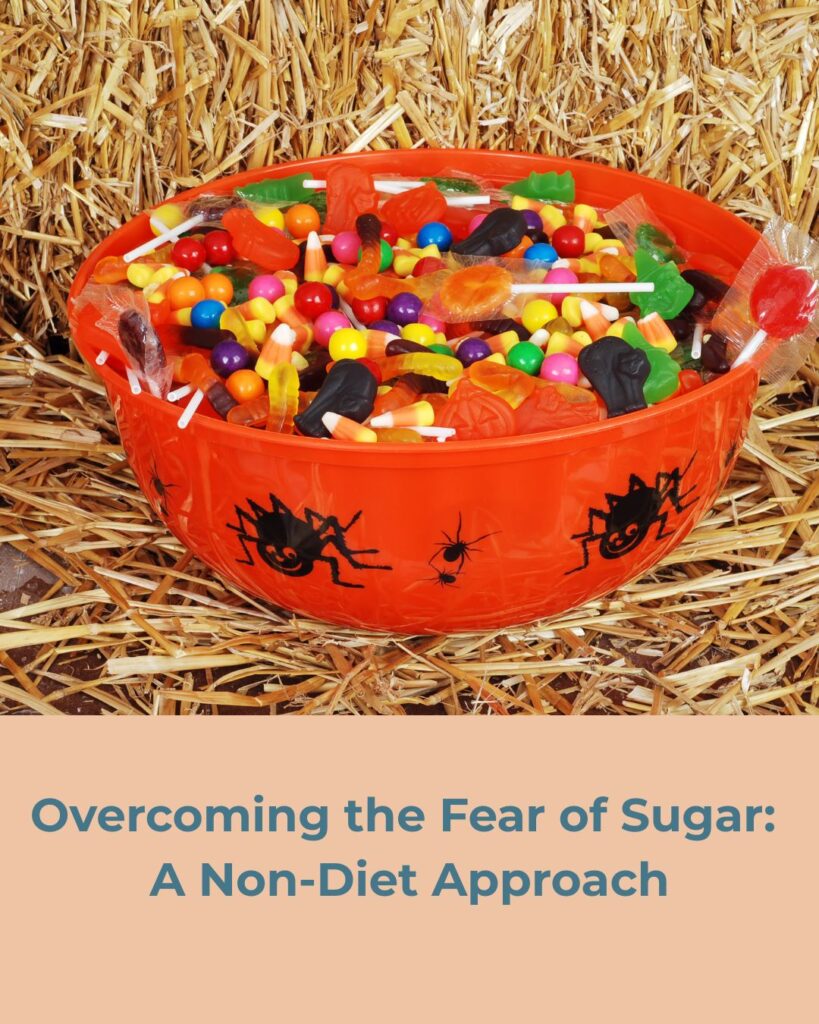
Halloween candy is everywhere this time of year, and for some people, that brings anxiety.
What if I eat too much?
What if I can’t stop once I start?
What if my kids eat all their Halloween candy?
If these thoughts sound familiar, you’re not alone. The fear of sugar is deeply rooted in diet culture messages that teach us to view sweets as unhealthy, addictive, or something we need to control.
But what if trying to control sugar is actually making it harder to feel at ease around it?
In my work as a Registered Dietitian and Certified Intuitive Eating Counselor, I’ve found that the fear of sugar often goes beyond concerns about health. For many people, it’s really about the fear of losing control around food.
And ironically, the more we restrict sweets, the more powerful they can become.
The Fear of Sugar Is Often About Losing Control
Many people believe that if they had more willpower, they wouldn’t struggle with sweets. But what looks like a lack of self-control is often connected to restriction.
Here’s a familiar cycle:
- You decide to cut back on sugar or eliminate sweets.
- You avoid them for a while, even when you’re craving something sweet.
- Eventually, you eat something you’ve been avoiding and find yourself wanting more.
- You feel guilty and decide to be stricter next time.
Sound familiar?
This cycle reinforces the belief that sugar is something you can’t trust yourself around.
When foods are labeled as forbidden, they often become more desirable. Even telling yourself, “I shouldn’t be eating this,” can create a sense of deprivation.
Physical restriction matters, too. When we’re not eating enough throughout the day, our bodies naturally become more motivated to seek energy, including foods rich in carbohydrates.
For many people, this combination of physical and psychological restriction contributes to intense cravings and feeling out of control around sweets.
Sometimes, the solution isn’t more control. It’s more permission.
What About the Health Effects of Sugar?
Another common reason for the fear of sugar is the belief that it’s inherently harmful to our health. We hear messages about sugar contributing to diabetes, heart disease, and weight gain. It’s understandable that these messages create anxiety.
As a dietitian, I believe it’s important to acknowledge that nutrition is nuanced. While consistently high intakes of added sugar can contribute to certain health risks, that doesn’t mean sugar is toxic or that enjoying dessert is unhealthy.
Our bodies use glucose as an important source of energy, and foods containing sugar can fit into a balanced, nourishing eating pattern.
Your health is influenced by your overall eating habits, not by an individual cookie, piece of candy, or dessert.
It’s possible to care about nutrition while also enjoying foods that provide pleasure, comfort, and connection.
Giving Yourself Permission to Eat Sweets
One of the most important steps in overcoming the fear of sugar is giving yourself unconditional permission to eat it—a central principle of Intuitive Eating.
This doesn’t mean you have to eat sweets all the time or ignore how your body feels. It means removing the judgment and rules that make certain foods feel forbidden.
You can enjoy chocolate because it tastes good. You can have dessert without exercising first. And you don’t need to compensate for Halloween candy by skipping meals the next day.
At first, permission may feel uncomfortable, especially if you’ve spent years restricting sweets. But with consistent access and less judgment, many people find that sweets become less emotionally charged.
You may begin to notice:
- You can enjoy dessert without guilt.
- You don’t feel compelled to eat sweets simply because they’re available.
- Sometimes you want something sweet, and sometimes you don’t.
- You can make choices based on hunger, satisfaction, and how your body feels.
The goal isn’t to stop craving sugar. It’s to feel comfortable enough around it that cravings no longer feel threatening.
Gentle Nutrition Without Fear
Making peace with sugar doesn’t mean nutrition stops mattering. It means approaching nutrition from a place of care rather than fear.
Eating regular, satisfying meals can help prevent the intense hunger that sometimes makes sweets feel especially urgent. Enjoying dessert alongside or after a balanced meal may also support satisfaction and a steadier blood sugar response.
And sometimes you might simply want a piece of candy because it sounds good. That’s okay, too.
Rather than asking, “How can I avoid sugar?” consider asking:
“How can I nourish myself while making room for foods I enjoy?”
That’s what gentle nutrition is about.
Helping Kids Overcome the Fear of Sugar
As both a dietitian and a parent, I understand how challenging Halloween candy can feel.
But when sweets become something children must earn, sneak, or negotiate for, they can take on greater importance.
Here are a few ways to approach candy with less anxiety:
- Avoid labeling candy as bad. Different foods provide nourishment, enjoyment, and pleasure.
- Offer sweets without making them a reward. Candy doesn’t need to be earned by finishing vegetables or cleaning a plate.
- Maintain regular meals and snacks. Kids don’t need to eat less during the day to make room for Halloween candy.
- Encourage curiosity rather than judgment. Help children notice hunger, fullness, and satisfaction without commenting on how much they’ve eaten.
- Model a relaxed attitude. Let your children see you enjoying sweets without guilt.
Parents can still provide age-appropriate structure around candy. The goal is to create an environment where sweets aren’t surrounded by fear or shame.
Healing the Fear of Sugar You Grew Up With
For many adults, the fear of sugar began in childhood.
Maybe you heard messages like:
“Sugar is bad for you.”
“Don’t eat too much or you’ll gain weight.”
“No dessert until you finish your dinner.”
These early experiences can shape our relationship with sweets well into adulthood.
Consider asking yourself:
- Where did I learn that sugar was something to fear?
- What rules do I still have about eating sweets?
- How has my fear of sugar affected my enjoyment of food?
- What might change if I could enjoy sweets without guilt?
Recognizing these beliefs is an important step toward changing them.How has that fear affected my enjoyment of food?
Letting Go of the Fear of Sugar
After more than 25 years as a dietitian, one thing I’ve learned is that a healthy relationship with food isn’t built on fear.
You don’t need to earn dessert, burn off Halloween candy, or eliminate sugar from your home to care for your health.
And you don’t have to choose between enjoying sweets and nourishing your body. Both can exist together.
Letting go of the fear of sugar isn’t about eating more or less of it. It’s about creating a relationship with food where sugar no longer has so much power over you.
And that freedom is worth making room for.
Additional Reading
Breaking Free From the Food Scarcity Mindset
Rethinking Food Addiction Research: Critiques, Concerns & Questions by Marci Evans, RD.