
How to Prioritize Yourself
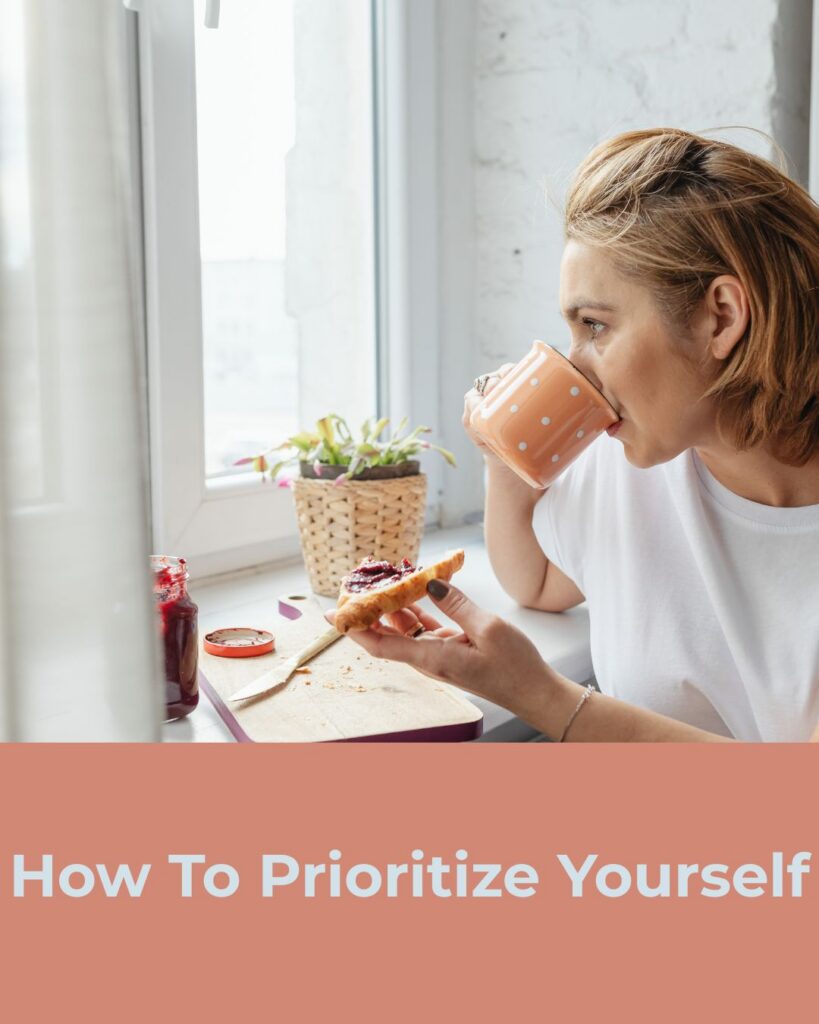
For many women, learning how to prioritize yourself isn’t about motivation — it’s about unlearning the habit of putting others first.
This is something I often see in my practice. I work with women who are trying to build sustainable habits without running themselves into the ground. The women I sit across from are capable, thoughtful, and deeply caring. They anticipate what everyone needs before it’s spoken. They manage schedules, emotions, logistics, meals, appointments. They are the steady center of their households and workplaces.
And somewhere in all of that, they quietly move themselves to the bottom of the list.
It’s rarely intentional. It simply becomes the default.
She makes dinner and makes sure everyone else is served before sitting down herself. She keeps track of her children’s appointments but delays scheduling her own. Lunch becomes time to catch up on emails instead of time to eat. She stays late to finish one more task, and the walk she meant to take gets pushed to tomorrow.
Over time, this stops feeling like a choice. It feels like responsibility. Like competence. Like love.
But constantly placing yourself last has consequences — even when it looks responsible on the outside.
Why So Many Women Struggle to Prioritize Themselves
Many women have been subtly conditioned to equate love with self-sacrifice. Being dependable. Being low-maintenance. Holding everything together.
Even diet culture reinforces a similar message: take up less space, need less, be smaller.
So when someone suggests learning how to prioritize yourself, it can feel impractical. Or unnecessary. Or like one more thing to manage.
But prioritizing yourself isn’t selfish. It’s sustainable.
You cannot consistently care for others from a place of depletion.
The Oxygen Mask Reminder
On every flight, we’re told to put on our oxygen mask before helping someone else.
Not because we care less — but because we are no help if we cannot breathe.
The same principle applies to daily life.
Eating regularly.
Sleeping enough.
Keeping your appointments.
Taking a break before you unravel.
These are not indulgences. They are oxygen.
What Happens When You Don’t Prioritize Yourself
When your needs consistently go unmet, your body and nervous system feel it.
Irritability increases.
Resentment builds quietly.
Decision fatigue sets in.
You begin to feel disconnected — from your energy, your emotions, and even your hunger cues.
Sustainable health becomes much harder when you are chronically running on empty. You cannot build long-term well-being on exhaustion.
This often shows up in eating patterns.
When you consistently put others — and your work — first, eating becomes reactive instead of intentional. Lunch gets skipped because meetings run long. You eat quickly between tasks and barely register it. By the end of the day, you’re overly hungry and depleted.
At home, you might serve everyone else first and eat last. Or wait until the house is quiet before finally sitting down — when your nervous system is already overstimulated.
None of this is about willpower.
When your body is under-fueled and your system is taxed, food decisions become harder. Hunger feels more urgent. Emotional regulation thins. You may eat quickly, past fullness, or feel disconnected from what you actually need.
Over time, frustration builds — when the root issue isn’t food.
It’s depletion.
When women begin practicing how to prioritize yourself — protecting lunch breaks, sitting down to eat, building in pauses before exhaustion sets in — their relationship with food often softens. Not because they tried harder, but because they finally had the capacity to respond to their body.
How to Prioritize Yourself in Everyday Ways
Learning how to prioritize yourself rarely requires dramatic change. It is usually quiet and practical.
It might mean:
- Sitting down to eat even if the kitchen isn’t clean
- Going to bed before everything is finished
- Letting dinner be simple
- Saying no to one more commitment
- Booking your own appointment — and keeping it
It is less about indulgence and more about maintenance.
If you’re unsure where to begin, ask yourself:
Where am I consistently last?
What basic need have I been postponing?
What would change if my needs mattered equally — not more than others, but equally?
That shift — from last to equal — can be transformative.
If you’re working on building sustainable habits that support your health without burnout, you can learn more about my approach.
When you practice prioritizing yourself in steady, practical ways, something softens. Energy stabilizes. Resentment decreases. Food feels more neutral. Health behaviors become sustainable — not because of discipline, but because there is finally capacity.
Filling your cup doesn’t take away from others.
It ensures there is something in the cup to offer.
And you deserve that steadiness, too.
Ready to Stop Running on Empty?
If this feels familiar, start small.
Not a complete overhaul.
Not a dramatic shift.
Just one place where you move yourself from last to equal.
Your needs are not a disruption. They are part of the equation.
And if you’re noticing how difficult this feels, that makes sense. These patterns run deep. Support can make that shift steadier and less overwhelming.
You deserve care that is consistent and sustainable — not something squeezed in after everything else is done.
If you’d like support in learning how to prioritize yourself in a sustainable, weight-inclusive way, you can schedule a consultation here.