
Why Am I Thinking About Food All the Time?
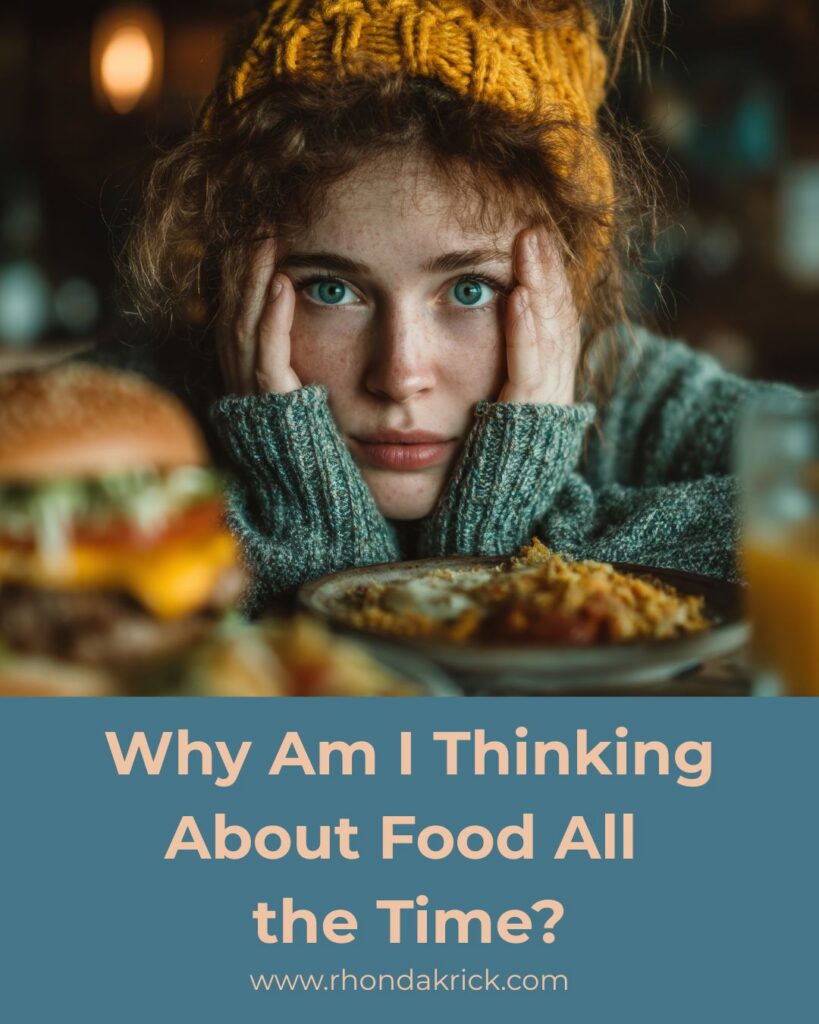
Nearly every day, I hear the same thing from clients.
“I feel like food is always on my mind.”
They describe thinking about what they’ll eat for dinner while they’re still eating lunch. Replaying meals from earlier in the day and wondering if they ate too much. Planning how they’ll eat “better” tomorrow.
Food isn’t just part of the day. It can start to feel like it’s taking up an enormous amount of mental space.
Often they add, almost apologetically: “I hate that food matters this much.”
Many people assume this means they lack discipline or self-control. But in reality, thinking about food all the time is often a completely normal response to restriction.
I’ve written previously about food obsession and how it can take over your thoughts, and many people are surprised to learn that these constant food thoughts are often connected to dieting and restriction.
In fact, it may be one of the clearest signals that your body is trying to get your attention.
When Thinking About Food All the Time Takes Up Too Much Mental Space
Food preoccupation can show up in many ways:
- Planning meals far in advance
- Replaying what you ate earlier in the day
- Constantly debating what you should or shouldn’t eat
- Thinking about your next meal even when you just ate
- Watching cooking videos or looking at recipes for hours
- Feeling like food decisions take up a huge amount of mental energy
When someone is thinking about food all the time, it can feel exhausting. Many people assume it means they lack willpower or self-control.
But in many cases, the opposite is true.
Food preoccupation is often the result of trying very hard to control food for a long time.
The Biology Behind Thinking About Food All the Time
One of the most fascinating demonstrations of why people end up thinking about food all the time comes from the Minnesota Starvation Experiment, conducted during World War II.
In this study, healthy young men volunteered to follow a period of semi-starvation so researchers could understand the effects of famine. Even though the participants were not starving by modern definitions, their calorie intake was reduced significantly.
The results were striking.
Participants became intensely preoccupied with food. They talked about food constantly. They read cookbooks and collected recipes. Some even reported dreaming about food.
Food became the center of their mental world. This happened not because the men were weak or lacked discipline. It happened because their bodies were responding exactly as they were designed to respond when food becomes scarce.
When the brain senses restriction, it naturally increases attention toward food.
This is a survival mechanism.
Why Dieting Can Lead to Thinking About Food All the Time
Although most people are not participating in starvation experiments, many experience similar effects through chronic dieting. Dieting can create subtle but powerful forms of restriction, such as:
- Skipping meals
- Eating far less than your body needs
- Eliminating entire food groups
- Following rigid food rules
- Constantly trying to “eat less”
Even when restriction is mild, the brain often registers it as a potential shortage. When that happens, food becomes more mentally important. Your brain begins to prioritize thoughts about food in the same way it prioritizes thirst when you’re dehydrated or sleep when you’re exhausted.
In other words, thinking about food all the time is often your body trying to protect you.
Mental Restriction Can Also Cause Food Thoughts
Sometimes people say:
“But I’m eating plenty of food. Why am I still thinking about food all the time?”
In these cases, mental restriction may still be present.
Mental restriction can look like:
- Constantly judging food choices
- Labeling foods as “good” or “bad”
- Feeling guilty after eating certain foods
- Planning how to compensate for what you ate
- Believing you “shouldn’t” want certain foods
Even when food intake appears adequate, the mind may still feel restricted. And when food feels forbidden or tightly controlled, the brain tends to focus on it even more.
Why Thinking About Food All the Time Often Improves When People Eat Enough
One of the most reassuring things I see in my work is that thinking about food all the time often decreases once people begin eating more consistently and adequately.
When the body starts to trust that food is available, the brain no longer needs to keep sounding the alarm.
People often notice changes like:
- Food thoughts becoming less intense
- Less urgency around eating
- More ability to focus on other parts of life
- Meals feeling calmer and less stressful
This process doesn’t happen overnight. If someone has spent years restricting food, it may take time for the body to feel safe again. But over time, many people experience something they haven’t felt in years:
more mental space.
When Food Stops Taking Center Stage
When food is no longer scarce or tightly controlled, it often becomes what it was always meant to be: An important part of life, but not the center of it.
People begin to think less about food and more about the things that actually matter to them—relationships, work, creativity, family, and experiences. In other words, the goal isn’t to stop caring about food completely.
Food will always matter. But it doesn’t have to take up so much mental space in your life.
If You Feel Like You’re Thinking About Food All the Time
If you find yourself thinking about food all the time, it doesn’t mean you lack discipline or willpower.
More often, it means your body and mind have been responding to restriction, food rules, or scarcity for a long time.
When food has felt limited or tightly controlled, it makes sense that your brain would focus on it. Your body is simply trying to make sure its basic needs are met.
The reassuring part is that this pattern can change. When people begin eating more consistently, allowing a wider variety of foods, and letting go of rigid rules, something remarkable often happens.
Food slowly stops taking center stage. Thoughts about food become quieter. Meals feel calmer. And the mental energy that once went toward worrying about food begins to open up for other parts of life.
Because the goal isn’t to stop caring about food completely. Food will always matter. But it doesn’t have to take up so much space in your mind.
And when it doesn’t, life has room to expand again.
If you feel like food thoughts are taking up too much mental space, you don’t have to figure it out alone.
Working with a dietitian who takes a non-diet, weight-inclusive approach can help you understand what’s happening in your body and rebuild a more peaceful relationship with food.
If you’re interested in exploring this further, you can schedule a free 15-minute discovery call to see if working together feels like a good fit.