
Food Rules From Childhood (and How to Break Them)
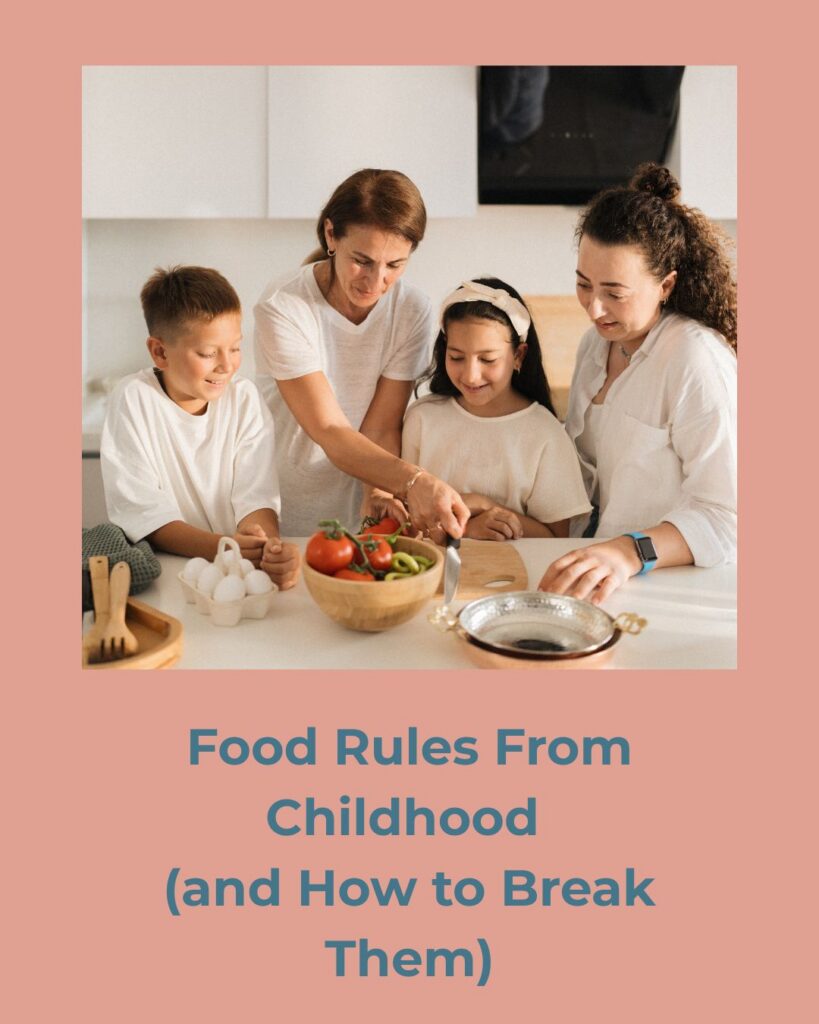
Mother’s Day often brings up appreciation, love, and connection.
But for many people, it can also stir something more complicated—especially when it comes to food and body image.
Because whether we realize it or not, most of us learned our food rules from childhood, shaping our relationship with food in ways we may not even recognize.
Not just through what was said—but through what was modeled. And those messages can stay with us for a long time.
What food messages do we learn from our parents?
Maybe it sounded like:
- “I shouldn’t be eating this.”
- “I need to be good today.”
- “You don’t need dessert.”
- “Finish your plate.”
Or maybe it showed up in more subtle—but powerful—ways. These are some examples from my practice:
- A client who grew up hearing that sugar was “bad” and wasn’t allowed to have sugary cereal or sweets at home. Now as an adult, she finds herself feeling out of control around those same foods and wonders why she can’t “just have one.”
- Another client who heard frequent comments about weight at home—about her own body or others’. She now notices she automatically scans her body in the mirror and assumes others are doing the same.
- A client who rarely saw her mom eat a full meal, often skipping meals or “being good,” and now struggles to recognize her own hunger cues.
- Someone who remembers being told to clean their plate no matter what, and now feels disconnected from fullness and unsure when to stop eating.
These early experiences often become food rules from childhood—internal guidelines about what, when, and how much it’s “okay” to eat.
How do food rules from childhood affect your relationship with food?
Food rules from childhood can shape how you think, feel, and behave around food well into adulthood.
They often show up as:
- Food guilt
- Fear of certain foods
- Difficulty trusting hunger and fullness
- Feeling “out of control” around food
- Believing your worth is tied to your body
You might find yourself thinking:
- “Why do I feel guilty after eating?”
- “I can’t stop thinking about food.”
- “I hear my mom’s voice when I eat.”
For example, that client who wasn’t allowed sugar now notices that once she starts eating sweets, it feels hard to stop—not because she lacks willpower, but because restriction increased the intensity and urgency around those foods.
Another client who grew up around weight-focused conversations avoids eating in front of others or second-guesses her choices, worrying what people might think.
These patterns aren’t personal failures—they’re learned responses.
And they can be unlearned.
Why do these patterns continue into adulthood?
Even when you intellectually know better, food rules from childhood can still feel automatic.
That’s because they were learned early, repeated often, and reinforced by diet culture over time.
You may notice:
- Guilt showing up before you even realize it
- Anxiety around certain foods
- Worry about what others think when you eat
- Catching yourself repeating the same thoughts you grew up hearing
That moment—when you notice it—isn’t failure.
It’s awareness. And awareness is where change begins.
This isn’t about blaming moms
It’s important to say this clearly:
This is not about blaming moms.
Most were doing the best they could with what they knew.
The mom who limited sugar likely believed she was protecting her child’s health.
The one who talked about weight may have been repeating messages she learned herself.
Diet culture has been loud, persistent, and deeply ingrained for generations. These beliefs didn’t start with your mom—and they don’t end with you unless something shifts.
How can you break food rules from childhood?
Breaking the cycle doesn’t mean doing it perfectly.
It means doing it differently.
Here are a few gentle shifts:
1. Notice without judgment
Instead of “Why am I like this?” try:
→ “These are food rules from childhood that I learned.”
2. Get curious about your needs
Are you hungry? Tired? Overwhelmed?
Food is often meeting a need—not creating a problem.
3. Reintroduce foods with permission
That client who feared sugar began allowing sweets more regularly—and over time, the urgency and “out of control” feeling started to soften.
4. Shift the language around food
Move away from “good/bad”
→ All foods can fit.
5. Model flexibility, not perfection
Kids don’t need a perfect eater.
They need to see someone who eats, enjoys, and listens to their body.
Check out my previous post on challenging the food police for more ways to let go of food rules.
How can moms create a different food environment for their kids?
If you’re a mom, you might feel pressure to “get it right.”
But what matters most isn’t eliminating every diet culture message.
It’s creating a different overall environment.
One where:
- Dessert isn’t something that needs to be earned
- No foods are completely off-limits or “forbidden”
- Bodies aren’t constantly discussed or judged
- Meals are regular, adequate, and satisfying
That doesn’t come from perfection.
It comes from awareness, repair, and intention.
For those reflecting on their own experience
You don’t have to be a parent to do this work.
You can begin by:
- Noticing the food rules from childhood that still show up
- Questioning whether they actually serve you
- Practicing a more flexible, compassionate approach to eating
That’s how generational patterns begin to shift—one person at a time.
Closing
This Mother’s Day, instead of focusing on what was done “right” or “wrong,”
you might consider this:
What do I want my relationship with food to feel like—and which food rules from childhood am I ready to question?
FAQs About Food Rules From Childhood
What are food rules from childhood?
Food rules from childhood are beliefs learned early in life about what, when, or how much you should eat, often shaped by family and diet culture.
Why do I feel out of control around sugar?
Feeling out of control around sugar often comes from restriction. When foods were limited or labeled “bad,” they can feel more intense and harder to regulate later.
Why do I feel guilty after eating?
Food guilt is often tied to internalized food rules from childhood that label foods as “good” or “bad.”
How do I break the cycle with my kids?
Focus on flexibility, avoid labeling foods, and model a balanced, non-diet relationship with food.