
When Healthy Eating Becomes Unhealthy
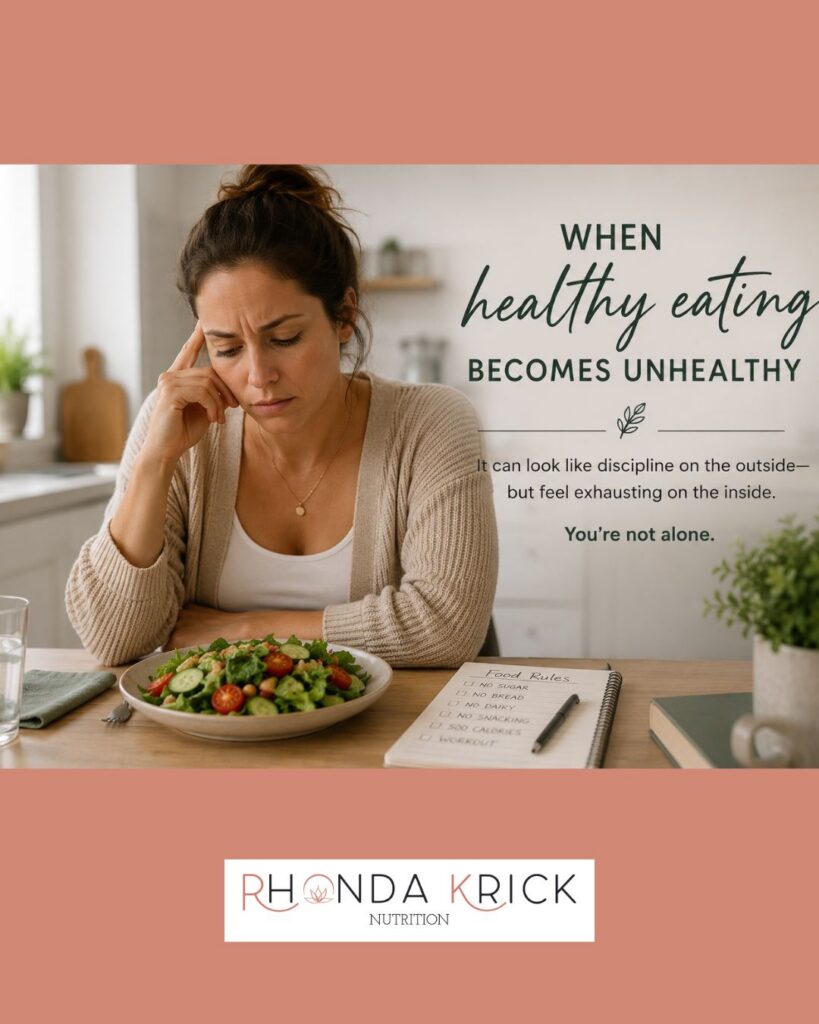
On paper, everything looks “right.” You eat “clean.” Exercise regularly. Avoid processed foods. Choose salads over sandwiches. Keep sugar “in check.” From the outside, it looks like health. But sometimes, this is exactly how healthy eating becomes unhealthy. Underneath the surface, something doesn’t feel okay. You may be thinking about food all day. Feeling anxious when plans change. Avoiding social situations that involve eating. Or feeling “out of control” the moment you eat something outside your usual routine. What looks like discipline from the outside can actually feel exhausting and all-consuming on the inside—and it’s more common than people realize.
Signs of Disordered Eating That Often Go Unnoticed
When healthy eating becomes unhealthy, it doesn’t always look extreme. In fact, it often looks like discipline. In my practice, I work with many individuals who don’t identify as having an eating disorder—but are struggling in ways that deeply affect their quality of life.
Here are some common signs of disordered eating:
- Rigid food rules (cutting out entire food groups or needing to eat “perfectly”)
- Food guilt, even after eating “normally”
- All-or-nothing thinking about food (“I was good all day, then I ruined it”)
- Preoccupation with food or thinking about it constantly
- Fear of certain foods (especially carbs, sugar, or “processed” foods)
- Avoiding social situations involving food
- Feeling out of control around food, especially after restriction
- Compensatory behaviors like skipping meals or over-exercising
These patterns can exist at any body size—and often alongside “normal” lab results.
Why “Clean Eating” Can Lead to Feeling Out of Control Around Food
One of the most confusing parts of this experience is the feeling of being “out of control.” Many people assume it’s a lack of willpower. But often, it’s the opposite.
When the body isn’t getting enough energy—or when certain foods are consistently restricted—it naturally pushes back. This can lead to stronger cravings, increased preoccupation with food, and episodes of overeating.
This is a key way when healthy eating becomes unhealthy:
What starts as control turns into a cycle of restriction and rebound.
For example, someone might eat very “clean” during the day—salads, lean protein, minimal carbs—and then find themselves overeating at night. Not because they failed. But because their body is trying to meet its needs.
The Hidden Impact of Food Guilt and Rigid Food Rules
When healthy eating becomes unhealthy, it’s not just about what you’re eating—it’s about how you feel about eating. Food guilt is one of the most common experiences I see in my work.
Clients often describe:
- Feeling like they’ve done something “wrong” after eating certain foods
- Believing they need to “make up for it” the next day
- Judging themselves harshly for eating beyond fullness
- Assuming others are noticing or judging their food choices
Over time, this creates a relationship with food that feels stressful, confusing, and exhausting.
And that stress can actually interfere with health—not support it.
Can You Have an Unhealthy Relationship with “Healthy” Food?
Yes—and this is exactly what we’re talking about when we explore when healthy eating becomes unhealthy. Eating nutritious foods is not the problem. The problem is when:
- There’s no flexibility
- Food choices feel driven by fear rather than care
- Eating becomes a source of anxiety instead of nourishment
- Your world starts to shrink around food rules
Health isn’t just about what you eat. It’s also about your relationship with food, your mental well-being, and your ability to engage fully in your life.
A Different Approach: Supporting a Healthier Relationship with Food
A non-diet, weight-inclusive approach to nutrition shifts the focus away from control and toward:
- Flexibility instead of rigidity
- Consistency instead of perfection
- Trusting your body’s cues
- Reducing guilt and shame around food
This doesn’t mean ignoring nutrition. It means supporting behaviors that are sustainable—physically and emotionally.
A Real-Life Example
A client I worked with came to me because she felt “out of control” with food at night. During the day, she ate what most would consider very healthy—salads, lean protein, minimal carbs. But by evening, she found herself overeating foods she tried to avoid, followed by guilt and frustration. She believed the problem was lack of discipline. But this is a classic example of when healthy eating becomes unhealthy. Her body was responding to restriction. As we worked on increasing her daytime intake and loosening rigid food rules, the nighttime eating decreased—and so did the shame.
Final Thoughts
When healthy eating becomes unhealthy, it often goes unnoticed—because it looks like discipline, control, or even “success.” But if your relationship with food feels stressful, consuming, or filled with guilt, that matters. You deserve more than a set of rules to follow. You deserve to feel at ease around food. To eat in a way that supports both your physical health and your emotional well-being.
If This Resonates With You
If you’re starting to notice when healthy eating becomes unhealthy in your own life, you’re not alone. Many people find themselves feeling more stressed, rigid, or preoccupied with food than they expected—especially when trying to “do everything right.” This doesn’t mean you’ve failed.
It often means your body and mind are asking for something different. With support, it’s possible to:
- Feel more at ease around food
- Let go of rigid food rules
- Reduce guilt and second-guessing
- Build a more trusting relationship with your body
If you’re curious about what this could look like for you, you can learn more about my approach or reach out here.
FAQ: When Healthy Eating Becomes Unhealthy
Can healthy eating become unhealthy?
Yes. When eating becomes rigid, anxiety-driven, or leads to guilt and loss of control, it can negatively impact both mental and physical health.
What are signs of disordered eating?
Common signs include food guilt, rigid rules, preoccupation with food, all-or-nothing thinking, and feeling out of control around eating.
Why do I feel out of control around food?
This is often a response to restriction—either physical (not eating enough) or mental (labeling foods as off-limits).
What is orthorexia?
Orthorexia refers to an unhealthy obsession with eating “perfectly” or “clean,” often leading to rigidity and distress.
How do I improve my relationship with food?
Focusing on flexibility, reducing food rules, and reconnecting with hunger and fullness cues can help rebuild trust with your body.
Join my newsletter and follow me on Substack for more support around intuitive eating, food guilt, and healing your relationship with food.