
The Protein Obsession: Do We Really Need Protein in Everything?
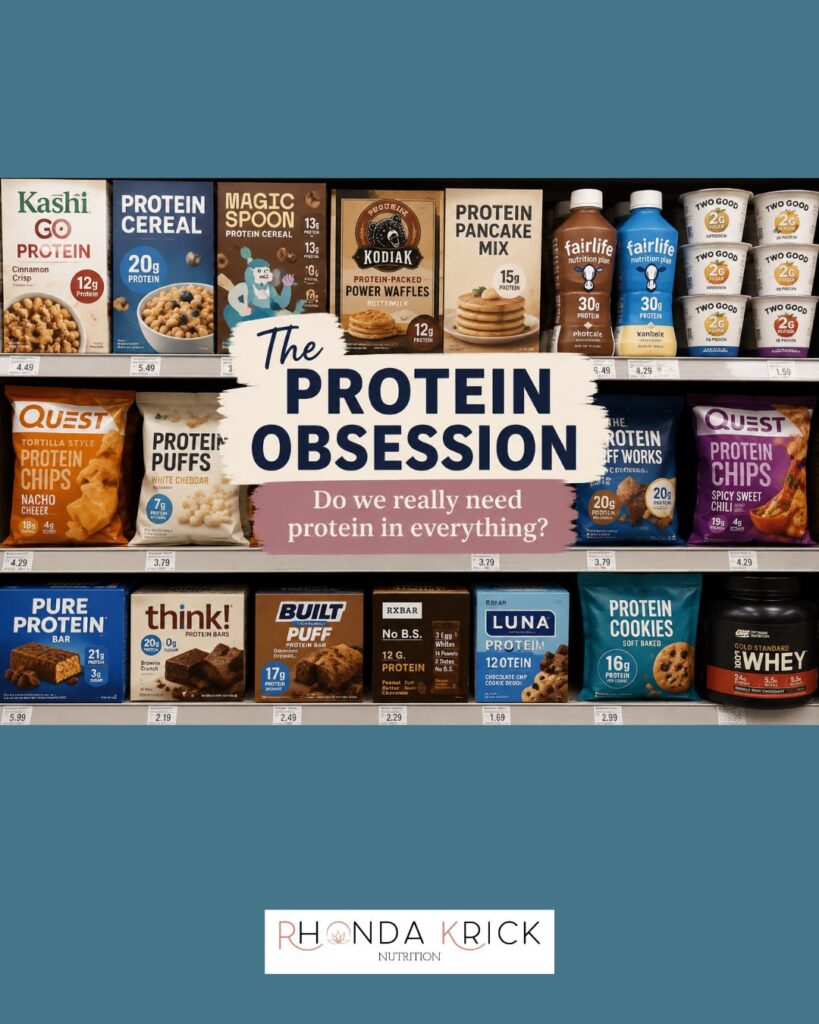
Take a walk through any grocery store today and you’ll see it everywhere: protein cereal, protein chips, protein ice cream, protein cookies, protein coffee, and even protein water. Scroll social media for a few minutes, and you might start to believe that every bite you eat should be an opportunity to add more protein.
The current protein obsession has become hard to ignore. Protein is being marketed as the answer to better health, weight management, aging well, and building muscle. And while protein is an important nutrient, the message that we need to maximize protein at every meal and snack can leave many people feeling anxious, confused, and disconnected from their own hunger and food preferences.
As a Registered Dietitian, I want to be clear: I’m not anti-protein. Protein supports muscle maintenance, helps with recovery, and contributes to feeling satisfied after eating. As we get older, including adequate protein throughout the day can be especially important for maintaining strength and overall health.
But there is a big difference between prioritizing protein and becoming consumed by the protein obsession.
When Healthy Habits Become Food Rules
One of the biggest concerns I have about the current protein trend is how quickly a helpful health recommendation can turn into another rigid food rule.
I hear clients say things like:
- “I can’t eat fruit unless I pair it with protein.”
- “This snack only has five grams of protein, so it’s not worth eating.”
- “I should skip the bagel because it doesn’t have enough protein.”
- “I need to hit my protein goal no matter what.”
These thoughts may sound like a commitment to health, but they can also create unnecessary stress around food. A healthy relationship with food includes flexibility. It allows us to choose foods based not only on their nutrient content, but also on hunger, satisfaction, convenience, culture, and enjoyment.
The Problem With Making Protein the Star of Every Bite
The problem with the protein obsession isn’t that protein is bad or that we shouldn’t care about it. The problem is when we start believing that every meal or snack needs to be optimized.
When protein becomes the only thing we focus on, we may begin to fear or undervalue other important parts of nutrition. Carbohydrates provide our bodies and brains with energy. Fats contribute to satisfaction, hormone health, and absorption of certain nutrients. Fruits, vegetables, and whole grains provide fiber, vitamins, minerals, and compounds that support long-term health.
And sometimes, food serves another purpose: comfort, celebration, connection, and pleasure. Not every bite needs to be a nutritional project.
Do You Need Protein With Every Meal and Snack?
This is one of the most common questions I hear as a dietitian. The answer is: it depends.
Protein needs vary based on age, body size, activity level, health conditions, and individual goals. For many people, including protein regularly throughout the day can support energy, satisfaction, and muscle health. However, you do not need to panic if every snack doesn’t contain protein or if you occasionally eat a meal that is higher in carbohydrates. Your health is shaped by your overall eating pattern—not by a single snack or one meal.
A More Balanced Approach to Protein
The goal is not to ignore protein. The goal is to put protein back in its proper place: as one important piece of the nutrition puzzle, not the measure of whether you have eaten “well.”
A balanced approach might look like:
- Including protein at meals and many snacks because it feels satisfying and nourishing
- Enjoying carbohydrates without guilt
- Choosing foods that provide pleasure and connection
- Letting go of the pressure to perfect every bite
- Trusting that consistency over time matters more than perfection in a single day
The current protein obsession reflects a broader trend I see often in my practice: the pressure to optimize every aspect of our health. In my previous post, When Healthy Eating Becomes Unhealthy, I discuss how the pursuit of healthy eating can become harmful when it creates rigid rules and disconnects us from our body’s natural cues. Healthy eating should support your life—not become a full-time job.
Instead of asking, “How can I add more protein to this?” try asking a different question:
“What would make this meal satisfying, enjoyable, and nourishing for me right now?”
Sometimes the answer will include protein. And sometimes, the answer is simply that you are hungry and ready to eat. The healthiest relationship with food is not built by chasing the perfect amount of protein. It is built through flexibility, balance, and trust in your body.
Ready to move away from food rules and find a more balanced approach to eating? Learn more about my weight-inclusive, non-diet nutrition counseling services.