
Body Changes in Midlife: Your Body Is Changing. Now What?
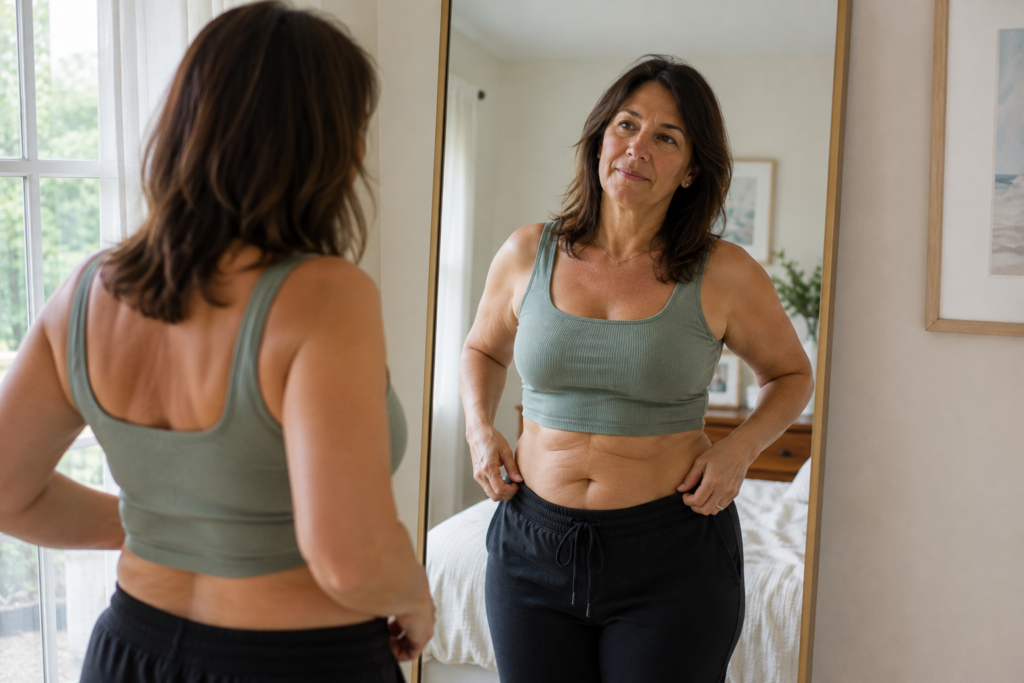
I hear some version of this in my office almost every week: “I don’t recognize my body anymore.” Clothes fit differently. Sleep is unpredictable. Energy comes and goes. Hunger and fullness cues that used to feel familiar may feel less clear.
For many people, body changes in midlife can feel surprising and unsettling. And underneath the physical changes, there’s often a deeper question: Is something wrong with me? Do I need to fix this?
As a dietitian who works from a weight-inclusive, non-diet lens, I want to offer a different starting point. Your changing body isn’t evidence that you’ve done something wrong. Many of the changes people notice during perimenopause, menopause, and midlife are normal and expected. The goal doesn’t have to be correcting your body. Instead, this can be an opportunity to understand it and learn what it needs in this stage of life.
Why Does Your Body Change in Midlife?
Midlife brings real physiological shifts, and it’s worth naming them without alarm. During perimenopause, estrogen and progesterone fluctuate, sometimes significantly, contributing to symptoms such as sleep disruption, hot flashes, mood changes, and changes in menstrual cycles.
Body composition and fat distribution can shift as well. Muscle mass gradually declines with age if we’re not actively supporting it, while sleep, activity, stress, medications, genetics, and hormones can all influence how our bodies feel and function. Bone health also becomes increasingly important as we age.
So if your body at 50 doesn’t look or feel exactly like your body at 30 or 40, that doesn’t necessarily mean you’re eating incorrectly or not exercising enough. Bodies aren’t designed to stay the same throughout our lives.
Why Body Changes in Midlife Can Feel So Hard
The physical changes are only part of the story. The other part is what we’ve been taught those changes mean. So much of the messaging we’re exposed to about midlife bodies is rooted in fear rather than care: Fight the midlife spread. Lose the menopause belly. Fix your metabolism. Get your body back.
The underlying message is hard to miss: Your changing body is a problem, and you should be doing something to stop it.
It’s easy to see how this can affect your relationship with food. Maybe you start cutting carbohydrates, skipping breakfast, or fasting for longer periods. You become focused on hitting a certain amount of protein every day. You exercise even when you’re exhausted because taking a day off makes you anxious. Or you notice yourself checking your stomach in the mirror or comparing your current body with photos from ten years ago.
These behaviors can easily be framed as “being healthy.” But when taking care of yourself starts creating more anxiety, rigidity, guilt, or preoccupation with food and your body, it’s worth paying attention.
For people who have spent years trying to control their weight or following food rules, body changes in midlife can also bring old patterns back to the surface—even after years of feeling relatively peaceful around food. That doesn’t mean you’ve failed or lost the progress you’ve made. You may simply be navigating a new body in a culture that gives you a lot of reasons to distrust it.
If you’re wondering what it looks like to move away from rigid food rules, read more about what a healthy relationship with food actually looks like
You Don’t Have to Choose Between Body Acceptance and Health
One of the biggest misconceptions about body acceptance is that accepting your body means you’ve stopped caring about your health. It doesn’t.
A weight-inclusive approach doesn’t mean ignoring changes in cholesterol, blood sugar, blood pressure, bone health, or other health markers. It means addressing those concerns directly through nutrition, movement, medication when appropriate, sleep, stress management, and medical care—rather than assuming weight loss itself is the treatment.
You can care deeply about your health without making changing the size of your body the goal. Instead of asking, “How do I get my old body back?” try asking, “What does my body need from me now?”
That small shift can completely change how you approach food, movement, and your body.
Navigating Hunger and Fullness in Midlife
Maybe hunger and fullness don’t feel as predictable as they once did. Sleep disruption, stress, medications, activity, changing routines, and hormonal shifts can all influence appetite and how connected you feel to your body’s signals.
That doesn’t mean your body is broken or that you can’t trust it. And Intuitive Eating isn’t about perfectly identifying hunger and fullness every time. It’s about staying curious about what your body is communicating and responding with flexibility.
Maybe skipping breakfast leaves you ravenous later. Maybe certain meals keep you satisfied longer. Maybe you need more food on days you’re more active. Maybe some days you’re simply hungrier than others. Your job isn’t to perfectly decode every signal. It’s to listen, notice, and respond with care.
Nutrition During Perimenopause and Menopause
When your body changes, the instinct may be to start taking things away: less food, fewer carbohydrates, smaller portions, or longer periods without eating.
Concerns about menopause weight gain or changes in body composition can make restrictive approaches especially tempting. But consistently under-fueling can leave you tired, overly hungry, preoccupied with food, and more disconnected from your body’s cues. Regular, adequate meals give your body the energy and nutrients it needs and can make it easier to notice hunger, fullness, and satisfaction.
There are also nutritional considerations that become increasingly important in midlife. Protein matters. But so do carbohydrates, fats, fiber, calcium, vitamin D, and adequate overall energy. Nutrition doesn’t have to become another project to perfect.
Instead of asking, What should I stop eating?, gentle nutrition invites you to ask: What can I add or adjust to better support my body right now?
Move in Ways That Support You
Movement can be incredibly supportive in midlife. Strength and resistance exercise in particular can help maintain muscle, support bone health, and preserve physical function as we age.
But your relationship with movement matters too. Exercise doesn’t need to compensate for what you’ve eaten or prevent your body from changing. You don’t have to earn rest, and more exercise isn’t automatically better.
The goal isn’t to punish your body into becoming smaller. It’s to help your body stay strong, mobile, capable, and supported.
Make Room for Body Image Changes, Too
Body acceptance doesn’t mean you have to love every change. You may genuinely miss your younger body. You may feel uncomfortable when clothes don’t fit the way they used to. You might see yourself in a photograph and feel surprised by the person looking back at you.
You can understand intellectually that bodies change with age and still have a hard time when it happens to yours. There can be grief in watching a familiar body change. Making room for those feelings—without immediately responding by trying to change your body—is part of the process too.
Acceptance doesn’t have to mean loving what you see in the mirror. Sometimes it’s simply acknowledging, This is my body today, and choosing to care for it anyway.
A Different Way to Think About Body Changes in Midlife
Midlife isn’t a problem to solve. It’s a transition—and transitions often ask us to adapt. Your body may need something different from you now than it did ten or twenty years ago.
Maybe it needs more nourishment. Maybe it needs strength or rest. Maybe it needs medical support. Maybe it needs you to stop comparing it to an earlier version of itself. And maybe it needs a little more compassion while you figure this stage out.
Your body isn’t supposed to remain frozen at 30, 40, or any other age. So perhaps the goal when navigating body changes in midlife isn’t figuring out how to get your old body back.
Maybe it’s learning how to take care of the body you’re living in now.
Want more support for navigating food, body image, and nutrition without restrictive rules? Subscribe to my Substack for practical, weight-inclusive nutrition guidance delivered to your inbox or schedule a discovery call to learn how I can help you.