
Nutrition in Midlife: What Your Body Needs
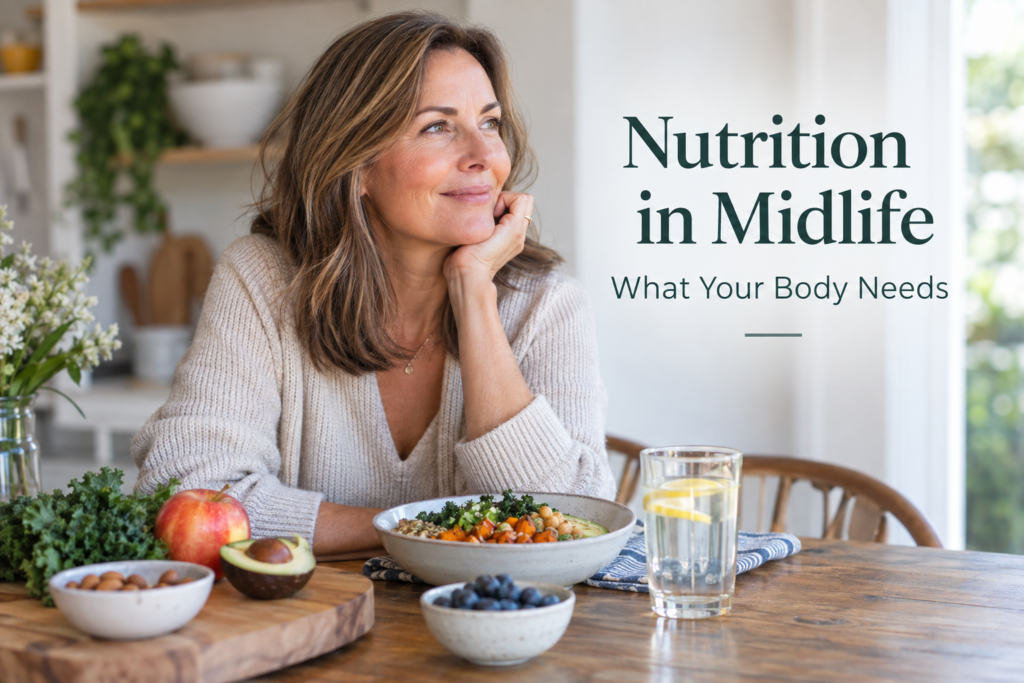
If you’re in your 40s or 50s, you’ve probably heard plenty of advice about what you shouldn’t be eating. Cut carbs. Eat less. Try intermittent fasting. Avoid sugar. Increase protein. Lose weight before menopause makes it “impossible.” It can feel like nutrition in midlife comes with an entirely new set of food rules.
But your changing body doesn’t need more restriction. It needs nourishment, consistency, and support. The hormonal changes of perimenopause and menopause are real. Research shows that this transition can be accompanied by changes in body composition, cholesterol and cardiovascular risk factors, while declining estrogen contributes to bone loss. Aging also makes preserving muscle increasingly important.
Rather than asking, “What should I eat less of?” consider a different question:
“What can I give my body to support my health for the years ahead?”
Start With Eating Enough
Women are often encouraged to respond to midlife body changes by eating less. But chronic restriction can make it harder to get enough of the nutrients that become especially important during this stage of life—including protein, calcium, fiber, vitamins, minerals, and essential fats.
Instead of automatically shrinking portions or eliminating foods, start with the basics: regular, satisfying meals that contain a variety of foods.
Nutrition in midlife doesn’t have to begin with subtraction. Often, it’s more helpful to think about what you can add.
Prioritize Protein—Without Obsessing Over It
Protein gets a lot of attention in midlife, and for good reason. Maintaining muscle becomes increasingly important as we age. Protein provides the amino acids needed to build and repair muscle, while resistance exercise gives the body a stimulus to maintain and build that muscle.
Research suggests that the combination of adequate protein and resistance training is more valuable for preserving muscle than simply consuming more and more protein. You don’t need to track every gram or become obsessed with protein like many people do. Instead, aim to include a source of protein regularly throughout your day. Think eggs or Greek yogurt at breakfast, beans or chicken with lunch, tofu or fish at dinner, and foods like nuts, cheese, edamame, or yogurt with snacks. The goal isn’t to make protein another food rule. It’s simply to make sure you’re getting enough consistently.
Carbohydrates Still Belong
One of the most common messages women hear during perimenopause is that they need to cut carbohydrates to prevent weight gain or blood sugar changes. Carbohydrates are not the enemy. They remain an important source of energy, especially if you’re physically active. Whole grains, fruits, beans, lentils, and potatoes also provide fiber, vitamins, minerals, and other nutrients. Rather than eliminating carbohydrates, think about building balanced meals by combining them with protein, fat, and fiber. That might look like oatmeal with nuts, berries, and yogurt; toast with eggs and avocado; or brown rice with salmon, edamame, and vegetables. This can support sustained energy, satisfaction, and blood glucose without requiring you to fear an entire food group.
Don’t Forget Fiber, Heart Health, and Your Bones
While protein gets much of the attention in midlife, fiber deserves some of the spotlight too. Higher-fiber eating patterns are associated with cardiovascular and metabolic benefits. Fruits, vegetables, beans, lentils, whole grains, nuts, and seeds are all great sources. And you don’t need to completely change your diet to get more fiber. Add berries to breakfast. Include beans in a salad. Choose whole-grain bread when you enjoy it. Snack on fruit and nuts.
Small additions add up.
Heart health also becomes increasingly important during the menopause transition. An American Heart Association scientific statement identifies this period as an important window for cardiovascular prevention because changes can occur in cholesterol, body composition, and vascular health. A Mediterranean-style eating pattern can provide a helpful framework: more fruits and vegetables, whole grains, beans, nuts and seeds, olive oil, and fish—without needing to label other foods “bad” or eliminate foods you enjoy.
Bone health deserves attention too. Declining estrogen accelerates bone loss, making adequate calcium and vitamin D increasingly important. Dairy products, fortified plant milks, calcium-set tofu, and canned salmon with bones are some ways to get calcium through food. Resistance and weight-bearing exercise also help support both bone and muscle health, making strength training an especially valuable addition in midlife.
What About Weight Changes?
For many women, this is the question underneath all the others. Bodies often change during midlife. Aging and the menopause transition can influence body composition and where body fat is stored. These changes can be difficult, particularly in a culture that tells women their bodies should remain unchanged throughout adulthood.
The understandable response is often: I need to eat less. But instead of making weight the primary measure of whether you’re taking care of yourself, consider expanding the definition of health.
Are you eating regularly? Getting enough protein and fiber? Supporting your bones? Moving in ways that maintain strength and cardiovascular fitness? Monitoring blood pressure, cholesterol, blood sugar, and other health markers with your healthcare team?
And perhaps just as importantly:
Can you care for your health without making food and your body the center of your life?
Gentle Nutrition in Midlife
Gentle nutrition is one of the principles of Intuitive Eating, and I think it’s particularly valuable during this stage of life. It allows us to hold two things at the same time:
Nutrition matters. And your relationship with food matters, too.
You can add protein without becoming obsessed with protein.
You can eat more fiber without fearing foods that contain less fiber.
You can support your blood sugar without eliminating carbohydrates.
You can care about cholesterol and still enjoy dessert.
And you can nourish your changing body without trying to force it back into the body you had 20 years ago.
Nutrition in midlife doesn’t have to be about eating less or following more rules.
Instead, try asking:
“What can I add to better support myself?”
More nourishment. More strength. More variety. More satisfaction. More flexibility.
And more compassion for the body carrying you into this next stage of life.
Your body isn’t asking you to eat perfectly.
It’s asking to be cared for.
If you’re navigating changes in your body, health, or relationship with food in midlife and would like individualized support, contact me to learn more about nutrition counseling and how we might work together. And if you’d like more conversations about intuitive eating, body image, gentle nutrition, and finding a more peaceful relationship with food, subscribe to my Substack for new articles delivered directly to your inbox.